The science of skin that looks after itself.
IMNX+®, pronounced Immunex, is short for Immune Nexus. A nexus is a point of connection, and that's how IMNX+® works: at the point where your microbiome, skin barrier and skin's natural defences meet, supporting them together as one system rather than one at a time.
Four systems, working together, supported at once.
They don't work in isolation. Disrupt one, and the rest are affected.

-
Microbiome
The community of beneficial microbes living on your skin, which keeps opportunistic bacteria in check.
-
Skin barrier
The outer layer that holds moisture in and keeps irritants out. When it weakens, skin becomes dry and reactive.
-
Immune defence
Your skin's response to stress, which shows up as redness and flare-ups when it is constantly triggered.
-
Cellular protection
Shielding skin cells from pollution, UV and environmental stress, and supporting their renewal.
Three pathways, one considered formula.
IMNX+® is powered by tribiotics for complete skin health support, formulated to work in sync with the skin’s natural defences and processes.
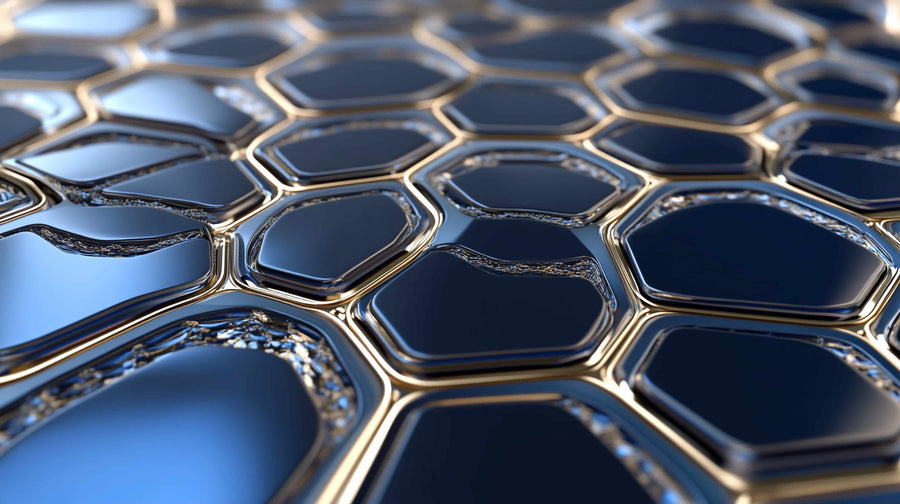
Prebiotics
The Barrier Support
Plant-based sugars that feed your skin’s existing defences to lock out dryness.
Inside IMNX+®Inulin, Alpha-Glucan Oligosaccharide, Avena Sativa (Oat) Kernel Extract

Probiotics
The Active Shield
Active, friendly bacteria that help your skin defend against irritation.
Inside IMNX+®Lactobacillus Ferment, Lactobacillus Ferment Lysate

Postbiotics
The Biological Repair
Pure, fermented extracts that soothe inflammation and strengthen the skin barrier.
Inside IMNX+®Lactococcus Ferment Lysate, Radish Root Ferment Filtrate, Ectoin
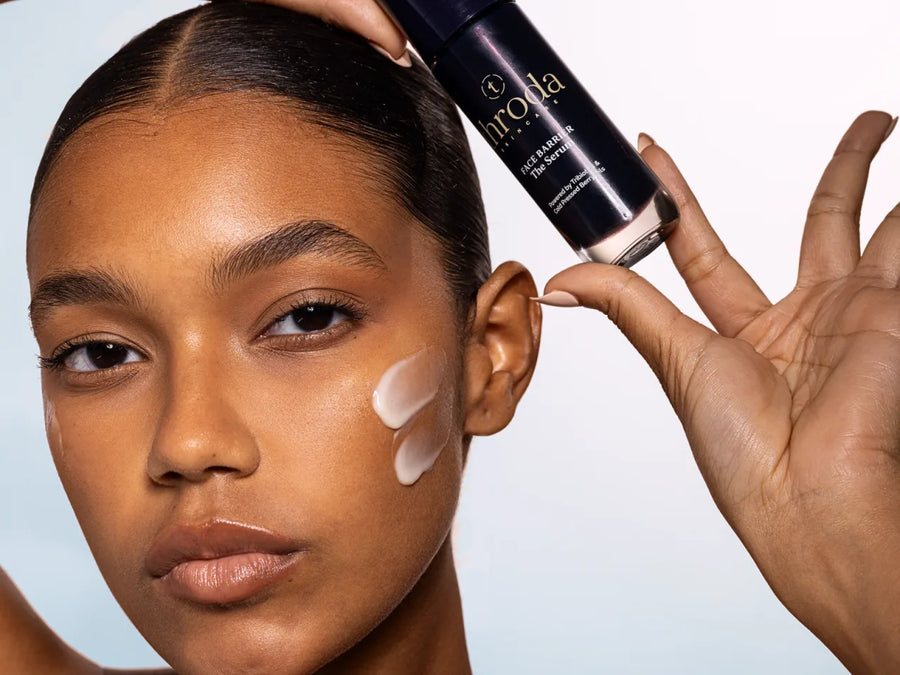
Formulated to match skin's natural acidity, supporting skin barrier repair and a healthy microbial balance.
Three clinical trials measuring skin barrier function, moisture loss, visible redness and fine lines over 28 days, a 42-day HRIPT patch test, and a four-phase Kind to Biome microbiome assessment.
Five independent studies. Nothing left to assumption.
The finished formula was assessed with instrumental measurements under dermatological oversight, alongside a separate four-phase microbiome evaluation.
Significantly improved
Vapour metre (TEWL), measured against each participant's own untreated control site.
Significantly reduced water loss
Transepidermal water loss measured with a vapour metre.
Measurably reduced
Independent colourimetry, isolating erythema from melanin for an objective reading across skin tones.
Significantly reduced
SELS® clinical imaging, developed with the University of Witten-Herdecke.
9.5/10 friendly
Four-phase Kind to Biome assessment: ISO 17516:2014 safety screening, eight resident flora species, four pathogenic strains and in vivo biodiversity.
Zero irritation reactions, 50 people, 42 days.
Human Repeat Insult Patch Test, with sensitive and eczema-prone skin deliberately included in the panel.
Testing methods
Clinical trials were conducted by Advanced Development and Safety Laboratories (ADSL), UK, with panels of 20 to 23 men and women aged 31 to 58. Dermatological oversight: Dr Alice Walker, GMC 7088381. HRIPT 109.12. Kind to Biome certificate ID 2024-24 49 02370. Consumer perception results are self-reported and shown separately from clinical measurements.
Five independent studies, in detail.
Everything you might want to know: what each study measured, who took part, exactly how it was run, what was found and what it means for your skin. Every study used the finished formula.
How the studies were run
Independent laboratories
The four clinical studies were run by Advanced Development and Safety Laboratories (ADSL) in the UK, accredited to ISO 9001. The microbiome study was run by Kind to Biome with QACS Laboratories. We supplied the serum; the labs designed the protocols, took the measurements and wrote the reports.
Dermatologist oversight
Every clinical study was overseen by Dr Alice Walker, a dermatologist registered with the General Medical Council (GMC 7088381). Each participant was examined before taking part.
The finished serum, used as directed
Every study tested the finished formula you buy, not individual ingredients. In the 28-day studies, participants used it on their face exactly as instructed.
Before and after, on the same skin
In each 28-day study, the same marked areas of every person's face were measured before first use and again on day 28, so each person is their own comparison.
Checked for chance
Results were tested with a paired t-test. 'Statistically significant' means the change was large and consistent enough across the group that it is very unlikely to be down to chance (P less than 0.05).
Ethics and consent
The studies followed Good Clinical Research Practice and the Declaration of Helsinki. Everyone gave written consent and data is held under GDPR. People who were pregnant, under 18, on medication that affects the skin, or had irritation on the test area could not take part.
-
01Skin barrier
Transepidermal water loss (TEWL)
Skin barrier function significantly improved
- Who
- 20 healthy adults, men and women
- How long
- 28 days of daily use, as directed
- Measured with
- Vapour Meter
- Run by
- ADSL, UK
What it measures
Transepidermal water loss is the amount of water that escapes through your skin into the air. A healthy skin barrier holds water in, so the lower the water loss, the stronger the skin barrier. It is the standard clinical measure of skin barrier function.
How it was run
Each participant was examined by the dermatologist, then rested to acclimatise before every reading, with room temperature and humidity recorded. A spot on the face was marked and measured before the first application, alongside an untreated control spot.
Readings were taken with a Vapour Meter: a small sealed chamber placed on the skin that measures how quickly water vapour builds up inside it. The same marked spots were measured again on day 28. All 20 participants completed the study.
What we found
Water loss through the skin was lower on day 28 than on day 1, and the difference was statistically significant.
What it means for your skin
Your skin barrier holds on to more of its own moisture. Skin that loses less water stays hydrated for longer, feels more comfortable, and is better protected against dryness and irritation.
Clinical Test Report 40690, Advanced Development and Safety Laboratories (ADSL), UK. Dermatological oversight: Dr Alice Walker, GMC 7088381.
-
02Ageing well
Surface Evaluation of the Living Skin (SELS®)
Fine lines significantly reduced
- Who
- 23 healthy adults, men and women
- How long
- 28 days of daily use, as directed
- Measured with
- Visioscan clinical imaging
- Run by
- ADSL, UK
What it measures
SELS® is a clinical imaging method developed with Professor Tronnier at the University of Witten/Herdecke in Germany, and used in skin research for over 30 years. A specialist camera captures the skin's surface and software analyses its texture, including the volume of fine lines.
How it was run
After the dermatologist's examination, set zones of each participant's face were imaged with a Visioscan camera before the first application, then imaged again on day 28. The software compared identical zones before and after, measuring the volume of fine lines in each. All 23 participants completed the study.
What we found
Fine line volume was lower on day 28 than on day 1, and the difference was statistically significant.
What it means for your skin
Fine lines were significantly reduced in four weeks. It is one part of helping your skin age well: a stronger, well-hydrated skin barrier, alongside visible results on the skin's surface.
Clinical Test Report 40691, Advanced Development and Safety Laboratories (ADSL), UK. Dermatological oversight: Dr Alice Walker, GMC 7088381.
-
03Calmer skin
Colourimetry
Redness measurably reduced
- Who
- 23 healthy adults, men and women
- How long
- 28 days of daily use, as directed
- Measured with
- Colourimeter
- Run by
- ADSL, UK
What it measures
A colourimeter measures skin colour precisely. This one reads the erythema index, the measure of redness, separately from the melanin index, the measure of pigment. That means redness is read objectively on every skin tone, without darker or lighter skin skewing the result.
How it was run
After the dermatologist's examination, colour readings were taken from each participant's face before the first application and again on day 28. All 23 participants completed the study.
What we found
Average redness readings were lower on day 28 than on day 1, so redness was measurably reduced. The change was modest, below the threshold for statistical significance, which is why we describe redness as measurably reduced.
What it means for your skin
After four weeks of daily use, redness was lower, not higher. For sensitive and reactive skin, that matters: the serum calms rather than aggravates.
Clinical Test Report 40692, Advanced Development and Safety Laboratories (ADSL), UK. Dermatological oversight: Dr Alice Walker, GMC 7088381.
-
04Sensitive skin
Human Repeat Insult Patch Test (HRIPT)
Zero irritation reactions
- Who
- 50 adults aged 20 to 72 with sensitive skin: 42 women, 8 men
- How long
- 42 days
- Measured with
- Repeated patch testing, graded by eye
- Run by
- ADSL, UK
What it measures
The HRIPT is the standard test for whether a product irritates skin, or sensitises it so it becomes more reactive over time. It deliberately exaggerates real use: the serum is held against the skin under a patch, far longer and more intensely than when you apply it.
How it was run
- Induction, three weeks: the serum was applied under a patch on the upper back nine times, each patch worn for two to three days.
- Rest, 10 to 14 days: no patches, so any delayed sensitivity could develop.
- Challenge, final week: a fresh patch on untreated skin for 48 hours, checked 1 hour and 48 hours after removal.
The study was single-blind and run under dermatological control. Every site was graded by the same qualified assessor, following European Society of Contact Dermatitis guidelines. All 50 participants completed the study.
What we found
No reaction in any participant at any of the 11 assessments. The mean irritation index was 0.00 in both the induction and challenge phases. Anything below 0.15 is classed as not irritating.
What it means for your skin
The serum is suitable for sensitive skin and skin prone to eczema. Even under conditions far more intense than everyday use, it caused no irritation and no sensitisation.
Laboratory Test Report HRIPT 109.12, Advanced Development and Safety Laboratories (ADSL), UK. Dermatological oversight: Dr Alice Walker, GMC 7088381.
-
05Microbiome
Kind to Biome assessment
Microbiome friendly, scoring 9.5 out of 10
- Who
- Laboratory study, including facial swabs from two volunteers
- How long
- Four phases
- Measured with
- Microbe counts against an untreated control
- Run by
- Kind to Biome with QACS Laboratories
What it measures
Your skin's microbiome is the community of bacteria and other microbes living on it. Many skincare products disrupt it without anyone noticing. Kind to Biome tests whether a product leaves the microbiome in balance, and scores it out of 10. A score of 5 or more is classed as microbiome friendly.
How it was run
The serum was mixed with each microbe and kept at body temperature for 30 minutes, then the surviving microbes were counted against an untreated control. Every analysis was carried out three times. The method is based on ISO 11930.
- Phase 1, purity: the serum was checked for contamination.
- Phase 2, friendly bacteria: eight species that naturally live on the face.
- Phase 3, opportunistic microbes: four species linked to skin problems.
- Phase 4, biodiversity: swabs from the faces of two volunteers, one man and one woman, to test a real, mixed skin microbiome.
What we found
- Overall: 9.5 out of 10
- Phase 1: no contamination found.
- Phase 2: 3.5 of 4. Seven of the eight friendly species were unaffected. One, Streptococcus mitis, was reduced.
- Phase 3: 2 of 2. No significant effect on the four opportunistic species.
- Phase 4: 4 of 4. No significant effect on the diversity of the skin's microbiome.
What it means for your skin
The serum works with your skin's microbiome rather than against it, leaving its natural balance and diversity intact. It is the principle IMNX+® is built on: supporting your skin's own systems instead of overriding them.
Kind to Biome certificate 2024-24 49 02370, with QACS Laboratories.
Good to know
- Clinical study panels of 20 to 50 people are standard for cosmetic testing.
- The 28-day studies compare each person's skin before and after use, rather than against a separate group using a placebo.
- Results are averages across each group, so individual results will vary.
- The consumer survey of 80 people is self-reported and shown separately from these instrument measurements.
Airless pump technology.
A formula is only as good as its delivery. Throda is packaged in a precision airless pump system, housed in premium Italian glass, and designed to protect the potency of every dose from first use to the last.

-
Zero air exposure
The vacuum-sealed chamber prevents any contact between the formula and the atmosphere, eliminating oxidation, the primary cause of active ingredient degradation.
-
Consistent dose delivery
Each pump delivers a precise, measured dose, so the concentration of actives reaching your skin is identical every time.
-
No contamination
The sealed system prevents bacterial contamination from the environment, which protects our biotech bacterial strains.
-
Fully recyclable
The bottle is fully recyclable, supporting our commitment to responsible manufacturing without affecting performance.
Four years of research, in one bottle.
Complimentary shipping · 28-day returns · Pay in 3 with Klarna
