How We Clinically Tested The Face Barrier Serum
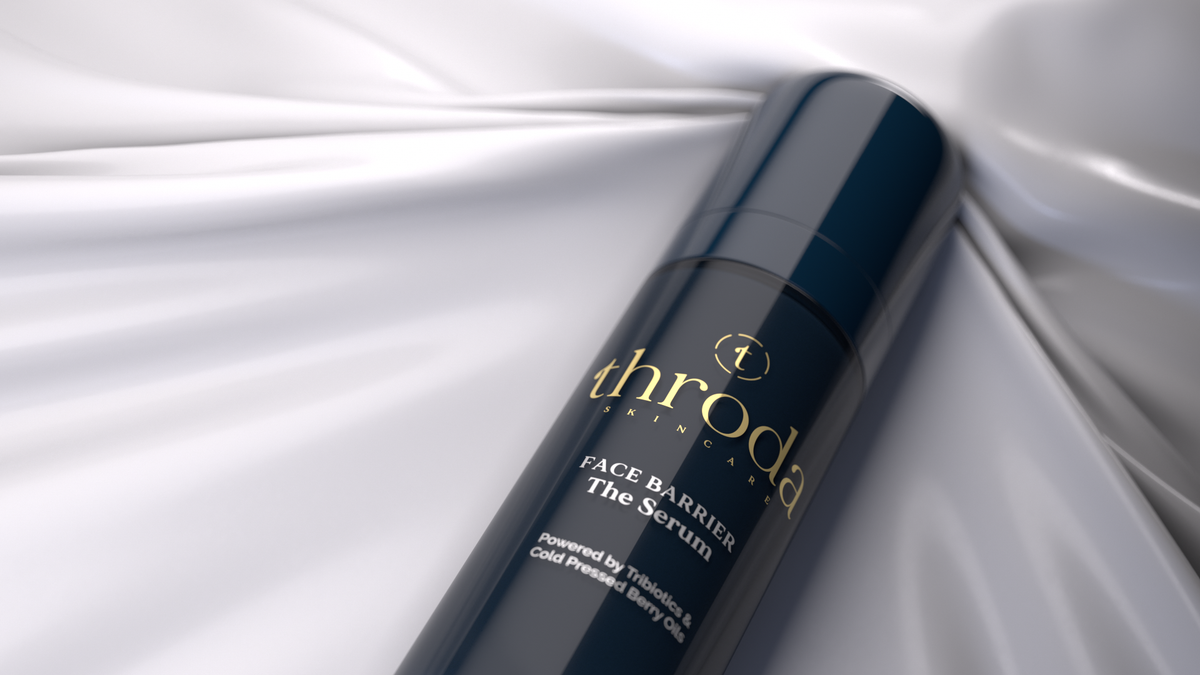
Clinical testing is not a standard practice in the skincare industry. It is expensive, time-consuming, and it produces specific results that constrain what brands can claim. Most brands choose not to do it.
Throda chose to do it.
The Face Barrier Serum has been independently tested across five separate studies. Three clinical trials and a Human Repeat Insult Patch Test were conducted by Advanced Development and Safety Laboratories Limited — ADSL — an independent UK laboratory based in Devon, under the dermatological oversight of Dr Alice Walker. A fifth study, a dedicated microbiome-friendliness assessment, was conducted by Kind to Biome AB in partnership with QACS Ltd. Laboratories. All methodology followed Good Clinical Research Practice and the principles of the Declaration of Helsinki.
This post explains exactly what each study measured, how independent testing works, and what the results mean for your skin.
What clinical testing actually means
There is a significant amount of confusion in the skincare industry around the language of proof. Terms like "clinically proven," "dermatologist tested" and "clinically tested" appear on countless products, often without any meaningful distinction between them.
A clinical trial involves a panel of real participants using a product as instructed over a set period of time. At the start and end of the trial, objective measurements are taken using calibrated clinical instrumentation. Those measurements are then analysed statistically to determine whether any change observed is genuine — that is, greater than what you would expect to see by chance.
This is different from a consumer perception study, in which participants report how they feel the product is working. Consumer perception data is valid and useful, but it is self-reported. Clinical trial data is objective. Both have a place, but they are not the same thing and should not be presented as if they are.
Throda conducted both. They are reported separately, clearly labelled, and you can read both in full on our science page.
The five studies
Study one: skin barrier function
The first study measured transepidermal water loss, known as TEWL. This is one of the most established objective measures of skin barrier function used in clinical dermatology.
TEWL measures the rate at which water evaporates through the skin. When the barrier is healthy and intact, this rate is low — the skin retains moisture efficiently. When the barrier is compromised, the rate rises and the skin loses moisture it cannot replace. This underlies persistent dryness, sensitivity and reactivity.
ADSL used a Vapour Metre to measure TEWL at baseline and again at day 28. Each participant served as their own control — their pre-treatment measurement was the benchmark against which their post-treatment result was assessed.
The result: skin barrier function was significantly improved after 28 days. The improvement was confirmed as statistically significant by a paired t-test at 95% confidence interval. 20 participants. Zero exclusions. Zero withdrawals.
In plain terms: the serum measurably strengthened the skin's ability to hold onto moisture. This is not a claim. It is a result.
Study two: fine lines and wrinkles
The second study used a method called Surface Evaluation of the Living Skin, or SELS. This is a clinical imaging technology that produces high-resolution images of the skin surface and uses software to calculate wrinkle volume in pixels — a precise, objective measurement that does not rely on visual assessment or self-report.
ADSL measured wrinkle volume at baseline and again at day 28 across 23 participants. The result: fine lines and wrinkles were visibly reduced after 28 days. The statistical result was highly significant — a P value of 0.0002, meaning the probability of this result occurring by chance is extremely low. It is the strongest statistical result of all five studies.
Anti-ageing is a category in which skincare claims are frequently exaggerated and rarely supported by objective evidence at this level. The SELS imaging result is independently verified and documented.
Study three: redness
The third study used colourimetry to measure the skin's erythema index — a standardised clinical measure of redness. The instrumentation separates the erythema signal from melanin, ensuring that skin tone does not interfere with the measurement.
The result: redness was reduced across all 23 participants after 28 days, supporting a calmer, more even complexion. For anyone with reactive, rosacea-prone or sensitive skin, this is a meaningful outcome — the formula actively works to reduce the visible signs of irritation rather than contributing to them.
Study four: skin compatibility, sensitive and eczema-prone skin
The fourth study was a Human Repeat Insult Patch Test — known as an HRIPT — the most rigorous form of dermatological skin compatibility testing available for cosmetic products. This is the study that directly substantiates claims of suitability for sensitive skin and eczema-prone skin.
An HRIPT runs across two phases over 42 days. During the induction phase, patches containing the product are applied to the skin of 50 healthy volunteers nine times over three weeks. Following a rest period of 10 to 14 days, a challenge patch is applied to a naive skin site and the skin is assessed for any signs of irritation or sensitisation.
The Face Barrier Serum produced zero reaction across all 50 participants on every single measurement day. The Mean Irritation Index was 0.00 in both the induction and challenge phases — classified as "not irritating" on the standardised scale. The panel included participants aged 20 to 72, across a full range of Fitzpatrick skin tones, with sensitive skin as a specific inclusion parameter.
The ADSL conclusion substantiated the following claims: dermatologically tested, clinically tested, clinically proven, kind to skin, mild for skin, safe for skin, suitable for sensitive skin, and suitable for skin prone to eczema.
Zero reactions. 50 participants. 42 days.
The Face Barrier Serum is also formulated to support acne-prone and rosacea-prone skin. Specific ingredients — including Lactococcus Ferment Lysate, which reduces inflammatory signalling, Inulin and Leuconostoc/Radish Root Ferment Filtrate, which restore microbial balance, and Ectoin, which stabilises cell membranes against environmental stress — were chosen in part for their relevance to these skin concerns. These claims are substantiated by ingredient science and mechanism of action rather than the HRIPT specifically.
Study five: microbiome friendliness
The fifth study was a dedicated microbiome-friendliness assessment conducted by Kind to Biome AB in partnership with QACS Ltd. Laboratories — a specialised protocol developed to evaluate whether a cosmetic formula disrupts or supports the skin's natural microbial ecosystem. This is a distinct form of testing from the ADSL studies and evaluates a different question entirely: not what the serum does to the skin's measurable properties, but how it interacts with the living microbial community on the skin's surface.
The assessment runs across four phases. Phase one confirms the product contains no endogenous microbial contamination. Phase two evaluates the formula's influence on eight beneficial skin microbes commonly found on the face. Phase three evaluates the formula's influence on pathogenic microbes. Phase four tests the formula against real skin swabs taken from volunteers to assess its effect on actual microbiome biodiversity.
The scoring system runs from a minimum of zero to a maximum of ten. A product must score five or above to be characterised as microbiome friendly.
The Face Barrier Serum scored 9.5 out of 10. Phase two scored 3.5 out of 4, phase three scored a perfect 2.0 out of 2, and phase four scored a perfect 4.0 out of 4. The independent conclusion was that the product can be characterised as microbiome friendly.
Why clinical and consumer perception data are reported separately
Alongside the five independent studies, Throda conducted a separate 4-week consumer perception study with 80 participants. The results were strong: 99% reported intensely hydrated skin, 98% felt their skin was less reactive and more resilient, 97% noticed a calmer complexion, and 98% noticed firmer, more revitalised skin.
These are meaningful numbers. But they reflect self-reported experience, not objective clinical measurement. Presenting consumer perception data alongside clinical trial data without distinguishing between the two is one of the most common ways the skincare industry misleads consumers.
Throda reports both sets of data clearly and separately. The clinical studies show what the serum does measurably. The consumer perception study shows how people experience it in real life. Both are true. They are not interchangeable.
Why most brands do not do this
Clinical testing costs money. It takes time. And it requires confidence in the formula — confidence that the results will support the claims being made.
Clinical testing also produces specific, defined results that constrain the language brands can use. Rigorous testing is incompatible with vague, sweeping claims. Brands without testing can say almost anything. Brands with testing have to say exactly what the data shows.
The Face Barrier Serum was formulated over four years alongside specialist British chemists, built from a research-first ingredient brief and powered by patent-pending IMNX+ Technology. Clinical testing was not an afterthought. It was the logical endpoint of a process built on evidence from the beginning.
The results confirmed what the science already pointed toward.
What this means for your skin
Five independent studies confirmed that the Face Barrier Serum significantly improves skin barrier function, visibly reduces fine lines and wrinkles with a highly significant statistical result, reduces redness for a calmer, more even complexion, produced zero irritation reactions across 50 participants in a rigorous patch test — substantiating suitability for sensitive and eczema-prone skin — and scored 9.5 out of 10 in an independent four-phase microbiome-friendliness assessment.
These results are documented, independently verified, and available in full on our science page.
That is what clinically proven should mean.
Frequently asked questions
What does clinically proven mean in skincare? In skincare, clinically proven means that a product has been tested in an independent clinical trial using objective instrumentation, with results analysed statistically to confirm the change observed is genuine and not due to chance. It is distinct from consumer perception studies, where participants self-report how a product feels. Genuine clinical proof requires independent testing, qualified oversight, and statistically significant results.
Is the Throda Face Barrier Serum clinically proven? Yes. The Face Barrier Serum has been independently tested across five separate studies. Three clinical trials conducted by ADSL confirmed a statistically significant improvement in skin barrier function, a highly significant reduction in fine lines and wrinkles, and a reduction in redness. An HRIPT patch test across 50 participants produced zero irritation reactions, substantiating suitability for sensitive and eczema-prone skin. A fifth study by Kind to Biome AB confirmed the formula is microbiome friendly with a score of 9.5 out of 10.
What is an HRIPT and why does it matter? An HRIPT — Human Repeat Insult Patch Test — is the most rigorous form of skin compatibility testing available for cosmetic products. It involves applying the product to participants' skin repeatedly over three weeks, followed by a rest period and a final challenge patch, to test whether the formula causes any irritation or sensitisation response. A zero score across all participants on all measurement days — as the Face Barrier Serum achieved — is the result required to substantiate claims of suitability for sensitive skin and eczema-prone skin.
What is TEWL and why does it matter for skin health? TEWL stands for transepidermal water loss. It measures the rate at which water evaporates through the skin and is one of the most established clinical measures of skin barrier function. A high TEWL reading indicates a compromised barrier that cannot retain moisture effectively. Reducing TEWL means the barrier is functioning better — the skin holds onto moisture, becomes less reactive and more resilient.
What is SELS testing in skincare? SELS stands for Surface Evaluation of the Living Skin. It is a clinical imaging method that captures high-resolution images of the skin surface and uses software to calculate wrinkle volume in pixels. Because it produces objective measurements rather than relying on visual assessment, it is one of the most rigorous methods available for substantiating anti-ageing claims in cosmetic clinical trials.
How is redness clinically measured in skincare trials? Redness is measured using colourimetry, which calculates the skin's erythema index — a standardised measure of redness derived from the skin's colour values. Unlike visual assessment, colourimetry separates the redness signal from melanin, ensuring that results are not affected by skin tone. It is the standard clinical method for substantiating redness-related claims in cosmetic products.
Why do most skincare brands not carry out clinical trials? Clinical trials are expensive, time-consuming, and produce specific results that constrain the claims a brand can make. Brands without clinical testing can make broader, vaguer claims than those whose language is bound by what the data actually shows. Throda invested in independent clinical testing because the formula was built on evidence from the outset, and the results needed to reflect that.
What is the Kind to Biome certification? Kind to Biome is an independent microbiome-friendliness certification awarded by Kind to Biome AB in partnership with QACS Ltd. Laboratories. Products are assessed across four phases covering microbiological quality, influence on beneficial skin microbes, influence on pathogenic microbes, and effect on microbiome biodiversity using real skin swabs from volunteers. The scoring system runs from zero to ten, with a minimum of five required to achieve certification. The Face Barrier Serum scored 9.5 out of 10.
What is a microbiome-friendly skincare product? A microbiome-friendly product is one that has been independently tested and confirmed not to disrupt the skin's natural microbial ecosystem. The skin microbiome is the community of beneficial bacteria that regulates immunity, maintains barrier function and protects against pathogens. Many conventional skincare products — particularly those containing certain preservatives or antimicrobial ingredients — damage this ecosystem. Microbiome-friendly certification confirms that a product leaves the skin's microbial community intact or actively supports it.
Is the Face Barrier Serum suitable for sensitive skin? Yes, and this is independently substantiated. The Face Barrier Serum was tested in a Human Repeat Insult Patch Test across 50 participants, including a sensitive skin panel, over 42 days. It produced zero irritation reactions across all participants on every measurement day. ADSL's conclusion specifically substantiated the claims "suitable for sensitive skin" and "suitable for skin prone to eczema" on the basis of these results.
The Face Barrier Serum was independently clinically tested by Advanced Development and Safety Laboratories Limited (ADSL), Devon, UK. Dermatological oversight: Dr Alice Walker, GMC 7088381. All studies conducted in accordance with Good Clinical Research Practice and the Declaration of Helsinki. HRIPT reference: HRIPT 109.12. Microbiome-friendliness assessment conducted by Kind to Biome AB in partnership with QACS Ltd. Laboratories. Certificate ID: 2024-24 49 02370.
Read the full clinical results on our Science page.
