Barrier care and skin health is not a trend
There is a narrative circulating in the beauty industry right now. Barrier care, it says, had its moment. It was 2023. We have moved on.
This is wrong. And it matters that it is wrong, because it reflects a fundamental misunderstanding of what barrier care actually is.
Barrier care is not a trend. It is skin biology. And skin biology does not go out of fashion.
What the trend narrative gets wrong
When the industry talks about barrier care as a trend, it is talking about a category of products including occlusive creams, ceramide serums and gentle cleansers that became commercially dominant around 2022 and 2023. The argument is that consumers have moved on to the next thing, and brands need to follow.
But this confuses the commercial moment with the underlying science. The reason barrier care became commercially dominant is because the science is sound. A healthy skin barrier retains moisture, blocks environmental aggressors, and prevents the immune overreaction that drives sensitivity, redness and inflammation. That was true before barrier care became a trend. It will be true after the next trend replaces it.
The skin does not read trend reports.
What the industry is actually saying when it declares barrier care over is that the category has become crowded and the marketing language has become generic. That is a commercial observation, not a scientific one. And it is a reason to do barrier care better, not to abandon it.
What barrier care is actually about
The skin barrier is not one thing. It is a system: a complex, interdependent architecture of structures and mechanisms that determine how the skin functions.
The stratum corneum is the outermost physical layer, a lipid matrix of ceramides, fatty acids and cholesterol that prevents moisture loss and blocks external aggressors. This is what most barrier care products address. Ceramides, occlusives and humectants all work at this level.
But the stratum corneum does not work in isolation. Its integrity depends on what sits beneath and beside it, specifically the microbiome, the skin's immune system, and the cellular renewal processes that maintain its structural integrity over time.
When any one of these systems is disrupted, the barrier suffers. Persistent dryness, sensitivity, redness, breakouts and accelerated ageing are all symptoms of a barrier that is not being properly supported, and not because there is not enough ceramide in the formula, but because the underlying systems are out of balance.
This is where most barrier care products stop short. They address the surface without engaging the biology underneath.
Why the microbiome changes everything
The skin microbiome is the ecosystem of bacteria, fungi and microorganisms that live on the skin's surface. When diverse and balanced, this ecosystem regulates immune responses, protects against pathogens and maintains the conditions the barrier needs to function. When disrupted by harsh products, environmental stressors, antibiotics or a compromised diet, the consequences are visible: sensitivity, inflammation, breakouts, barrier breakdown.
For years, the skincare industry either ignored the microbiome or actively damaged it. Antibacterial ingredients, synthetic preservatives and high-pH formulas disrupted the bacterial balance that the skin relies on. Products that claimed to treat skin concerns were often contributing to them.
The emergence of probiotic, prebiotic and postbiotic skincare represents a genuine scientific advance, not a trend. It represents the industry beginning to work with the skin's biology rather than against it. The understanding that skin health is microbial health is not a marketing angle. It is what the science says.
And it does not replace barrier care. It explains it more completely.
Where barrier care needs to go
The problem with the first wave of barrier care was not the premise. The premise that strengthening the skin's defences leads to healthier skin is correct. The problem was the scope. Addressing only the stratum corneum while ignoring the microbiome, the immune system and cellular renewal is like reinforcing a wall without fixing the foundations.
The next evolution of skin science is not something that replaces barrier care. It is something that completes it.
Barrier care that also addresses the microbiome. Barrier care that modulates immune responses rather than suppressing them. Barrier care that supports cellular renewal alongside surface hydration. This is not a new trend. It is a more complete understanding of how skin actually works.
Why Throda was built for this moment
Throda was not built in response to the barrier care trend. It was built in response to the science that underpins it, and the gaps that most barrier care products leave unaddressed.
IMNX+® Technology is a tribiotic complex of prebiotics, probiotics and postbiotics, developed over four years alongside specialist British chemists. It directly engages four skin systems simultaneously: the microbiome, the barrier, immune defence and cellular protection. Not one. All four.
The prebiotic component feeds beneficial bacteria, creating the microbial environment in which everything else can function. The probiotic component restores microbial diversity and communicates directly with the skin's immune system to reduce inflammatory responses. The postbiotic component delivers the bioactive compounds that strengthen barrier architecture, stimulate cellular renewal and direct long-term recovery.
This is not barrier care as the trend defined it. It is barrier care as the science demands it, working at every level of skin biology, not just the surface.
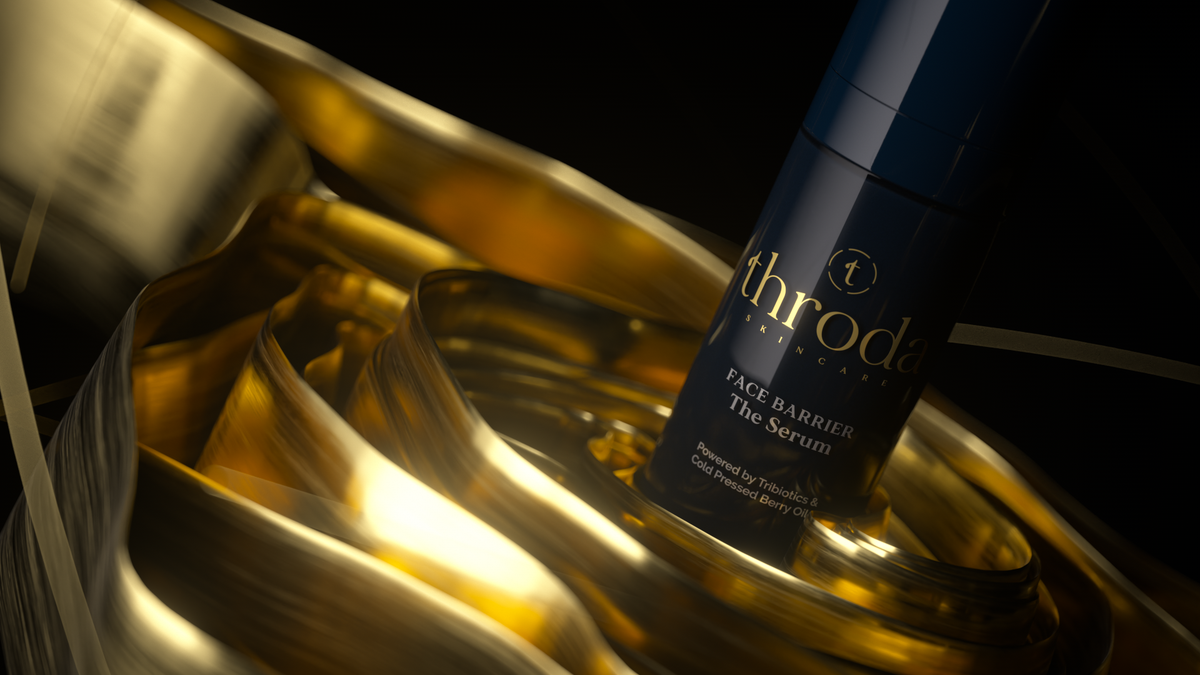
The Face Barrier Serum also achieved a 9.5 out of 10 score in an independent four-phase microbiome-friendly assessment by Kind to Biome AB, confirming that the formula not only claims to support the microbiome but has been independently verified to do so.
The skin is not following trends
The narrative that barrier care is over is a commercial argument dressed up as a scientific one. It serves brands that need something new to sell, and publications that need something new to write about. It does not serve people who want healthier skin.
Healthy skin requires a functioning barrier. A functioning barrier requires a balanced microbiome. A balanced microbiome requires products that work with the skin's biology rather than disrupting it. None of that has changed. None of it will change.
The brands that understand this are not chasing what comes after barrier care. They are building products that actually deliver what barrier care promised.
That is what Throda is.
Frequently asked questions
Is barrier care a trend? Barrier care became commercially dominant as a trend around 2022 to 2023, but the science it is based on is not new and will not date. The skin barrier is a fundamental biological system that determines how skin retains moisture, responds to environmental stress and manages inflammation. Products that support barrier function will always be relevant. What changes is the depth of understanding, not the importance of the underlying science.
What is the difference between barrier care and microbiome skincare? Barrier care typically refers to products that support the stratum corneum, the outermost skin layer, through ceramides, occlusives and humectants. Microbiome skincare addresses the bacterial ecosystem that lives on the skin's surface and plays a central role in regulating immune responses, barrier integrity and skin health. The two are not competing categories. A complete approach to skin health addresses both.
What is the skin microbiome? The skin microbiome is the complex ecosystem of bacteria, fungi and microorganisms that live on the skin's surface. When diverse and balanced, it regulates immunity, reinforces the barrier and protects against pathogens. When disrupted by harsh ingredients, environmental stressors or lifestyle factors, it becomes a source of sensitivity, inflammation and barrier breakdown.
What are tribiotics in skincare? Tribiotics is a term for the combination of prebiotics, probiotics and postbiotics used together in a formula. Prebiotics feed beneficial bacteria. Probiotics restore microbial diversity and communicate with the immune system. Postbiotics are the bioactive compounds produced by probiotic activity that directly benefit the skin, strengthening the barrier, accelerating cellular renewal and reducing inflammation. Using all three together provides more complete microbiome support than any single biotic approach.
What does IMNX+® Technology do? IMNX+® Technology is Throda's patent-pending tribiotic complex, developed over four years alongside specialist British chemists. It engages four skin systems simultaneously: the microbiome, the barrier, immune defence and cellular protection. Rather than targeting one concern or one pathway, it works across the full network of mechanisms the skin relies on to stay resilient, balanced and healthy.
Why does most skincare damage the skin microbiome? Many conventional skincare products, particularly those containing antibacterial agents, synthetic preservatives and high-pH cleansers, disrupt the bacterial balance of the skin without intending to. The skin evolved alongside its microbial ecosystem. Products that do not account for this can reduce beneficial bacterial populations, increase pathogen vulnerability and contribute to the sensitivity and reactivity they claim to treat. Microbiome-friendly formulation, confirmed by independent assessment rather than claimed in marketing, addresses this problem directly.
The Face Barrier Serum is powered by patent-pending IMNX+® Technology and holds a Kind to Biome certification with a score of 9.5 out of 10, independently assessed by Kind to Biome AB in partnership with QACS Ltd. Laboratories.
Explore the full science behind Throda on our Science page.
